

Working Smarter

How to Manage the Surprise Culprit Behind Your Stress

Posted by Joe Robinson

Woman victorious with work-life balance tablet

by Joe Robinson

Which stress triggers really drive you up the wall?  People jumping out of their skin with crisis mentality? Workload? Interruptions? Relatives? Technology updates every other day? Traffic?

There’s no shortage of candidates, is there? How tired are you of all these people and scenarios being able to manipulate your emotional reactions and set off a racing pulse, churning stomach, and white-hot anger or fear?

No doubt, very tired in more ways than one. Stress burns up the energetic resources in your body, so a steady dose of it will fuel constant fatigue that is cumulative. The fatigue from the stress of the day comes out of your hide the next day and the next if the body doesn’t get back to pre-stressor levels. Does that ring true for you?

However, you could manage all these aggravations, if you knew where the stress was coming from and had the right practices vetted by the science to shut down the overreactive survival equipment. These are things I teach in my stress management programs for individuals and organizations.

UNMASKING THE CULPRIT

So, here's the weird thing about stress. All those triggers I listed above are not driving your stress. The culprit isn't the external event—the deadline or the setback.

Stress is the result of something much closer to home: your reaction to the stressful event. It’s your thoughts in the moment that turn on the stress response. Whaaat?

I hate to tell you this, but you’re stressing yourself out. It’s your reaction to the stressor that fuels your stress. It’s the story you tell yourself about the stressful event that creates the stress.

The good news about that, though, is you can reject the doom-filled story fed to you by your ancient brain, which is trying to induce panic to get you to run or fight, and create a new story of your own. This way, you control the narrative, and, importantly, the self-talk.

It’s not the end. It’s a learning experience. It’s not beyond your capacity to handle. You’ve handled many other difficult things in your life. In fact, every time your brain thought you couldn't handle something, guess what? You handled it. You're still here, still kicking.

To take command, you tell yourself that the frightful stories fed to you are false, coming from a part of your brain that sees every threat as imminent physical death. You can rebut that story and come up with one of your own that reflects reality.

The key to your story is that you will overcome the demands, whatever they may be, by adjusting how you think about them. Instead of seeing them as being beyond your capacity, you reframe them as a challenge within your ability to handle.

Stress management is all about getting perceived control over demands. Tell yourself you can manage it, change how you view the stressor, make new adjustments to the task or how you deal with someone that give you more control, and you alter the perception of the threat to one that you have the wherewithal to manage.

Stress is very relative. What stresses you out doesn’t stress out someone else, and vice-versa. We all have things that used to drive stress but don’t anymore anymore—no doubt, because you found a way to manage or control it. You took away its power. It’s easy to see from this the role we play in creating stress—and can play in eliminating it.

THE ART OF NON-REACTION

Managing stress is the art of non-reaction, defusing extreme fight-or-flight reactions as quickly as possible after they go off. One way you can do this is to see the stressor as a con job unless your physical life is in danger.

Your ancient brain baits you into emotional reactions that bypass the modern brain and go directly to the original brain, home of irrational emotions, which was all we had to run things before the higher organs of the brain evolved that could weigh pro or con and act rationally. You have to find a way to return command back to your modern faculties.

The mission before you is to tell your brain, “I won’t take the bait.” Life is, in essence, a battle to keep the fear default under control so you can function in the world, assess concerns accurately, and find rational solutions.

Not falling for the calamitous alarms of the overwrought security equipment and knowing you can create a substitute story of reality keeps dramas you don’t need down and life manageable.

There will be many opportunities over the coming days to catch yourself in the stress act, not take the bait, and opt out. Stay nonreactive, and you stay healthy.

I’m a mental health, stress management, and work-life speaker and trainer who has brought solutions to individuals and organizations from IBM to Pfizer, LEGO, Cisco, Ocean Spray, Kellogg’s, New York City Public Health, the National Council on Mental Wellbeing, Kaiser Permanente, the U.S. Department of Housing and Urban Development and across the world from Mumbai to Bogota. I’m author of Work Smarter Live Better, Work to Live, and Don’t Miss Your Life.




Tags: stress relief, stress, burnout coach, stress management, chronic stress, controlling stress, stress reduction techniques, stress speakers, stress management training programs

When You're Told to Suck Stress Up, Spit It Out

Posted by Joe Robinson

Woman_victorious_Small

GALLUP TELLS US THAT STRESS LEVELS are at record highs.

How are you feeling it?

• Gut issues?

• Overwhelm? Your to-dos have to-dos have to-dos.

• Intrusive fears?

• Poor sleep and waking up in the middle of the night with racing thoughts?

• High anxiety and blood pressure?

DISPUTE AN OUT-OF-TIME BRAIN

I know what you’re going through as one who has tangled with this beast in my life, as all humans do—and as someone who teaches stress management and work-life balance to folks at organizations from IBM to Pfizer, and across the world from Mumbai to Bogota.

The message of my workshops and programs is that, despite how intensely we feel the false beliefs set off by a brain that wants to panic us into running or fighting or freezing, we don’t have to buy the hysteria. It’s a false alarm unless you’re going to die that second.

We can contest, dispute, and shut down the stress response, along with the fear, panic, fixation on bad events in tenses we’re not in, and the medical bills that come with it all.

The problem is that the culture teaches us next to nothing about how to manage our mind and the negative ruminations that drive stress.

The only thing we get is: “Suck it up!” Now, that’s a big help. Thanks for nothing.

How many times have you had that said to you or had that inference? What does that feel like? It just adds anger to the racing thoughts and pounding pulse.

It makes you think there’s something wrong with you because you can’t take it and everybody else can. All you have to do, though, is look at the sales of Paxil and Maalox. It’s everyone and everywhere.

SUCKING IT UP IS GREAT IF YOU LIKE STRESS

When we suck it up, what happens to the stress? Does it go away? No, just the opposite. We think about it. And think about it. That negative rumination is precisely what causes stress.

Unless you control the source of stress and the story you tell yourself about it, stress controls you. Your thoughts. Your mood. Your emotions. Your sleep. Your heart rate. Your blood pressure. Your cardiovascular system. Your digestion system. Your immune system. Your life through serious health conditions and making you un-present for it.

You don’t have to take it, though. You don’t have to suck it up.

You can spit it out.

There are many evidence-based tools to help you do that.

Here’s an example. When stress sets off fearful, anxious, extreme thoughts in your brain, challenge and vet the thought immediately with these three questions:

Is it accurate?

Is it useful?

Is it physical life-and-death?

Then take the stressor and the stressful thought it has fed your brain and finish these two sentences:

That’s not true because ……………………………………………………………………….

A more helpful way to see this is ………………………………………………………..

Contesting stress puts you in charge over the wacky features of a brain that thinks it’s 100,000 B.C.

The goal is catching yourself and staying non-reactive on the road to mental toughness.

If you would like to manage pressure and unbounded stress everywhere, click the button below or reach out to 310-570-6987 or joe@worktolive.info for details on my Manage Any Challenge Stress Management program.


Tags: stress and self-talk, overwhelm, avoiding burnout, stress management training, stress management speaker, burnout coach, job stress, reducing stress, stress management programs, rumination, how to stay calm, how to avoid panic, how to not freak out, stress management employee training, stress tools, anxious thoughts, managing stressful thoughts

The 7 Signs of Burnout

Posted by Joe Robinson

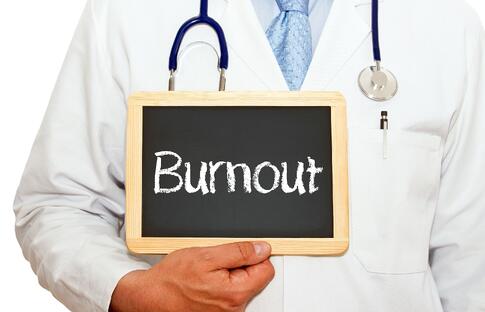
Burnout is a medical condition

I recently stumbled across an old episode of the Candid Camera show, which featured a woman driving a car with no engine. She pulls in to a gas station by coasting down an adjacent hill. When the dead vehicle comes to a halt at the station, the woman gets out and complains to the mechanics that it won’t start.

One of the mechanics looks under the hood, and to his surprise, finds a gaping void. “The reason the car won’t go is you ain’t got no engine,” he says. Another mechanic peers into the vacant space where the engine should be, scratching his head. The driver tells them the car has been working fine.

NO GET-UP-AND-GO

It reminds me of what happens to people whose engines have vanished, their get-up-and-go extinguished by burnout. Burnout doesn’t just kill physical vitality, motivation, and any semblance of work-life balance, it also guts the entire internal combustion machinery. You can’t get the ignition to turn over, because there’s nothing to turn over. 

Unlike with the gag car, we can’t look under the skin and spot the problem. But the void is as real as inside that vehicle, and we have to recognize it and resolve it or pay with serious consequences for work, health, family, and life. 

In an always-on world, many will face burnout at least once in their careers, and once they do and recover from it, they will never go down that road again because of the misery it inflicts on every part of work and life. Burnout can lead to major health issues, from stroke to depression.

I have coached hard-working people with burnout around the country and the world, and helped them recover from burnout. What they all say is that feeling exhausted and without energy or drive is an alien feeling to them. This is because people who get burned out are not slackers—they're the hardest workers.

Click for Free Burnout Consultation

Burnout isn’t just being very tired, which it is (the main dimension is exhaustion). It’s a serious medical condition that can set off other problems—depression, stroke, heart attacks, suicidal thoughts, breakdown. The last stage of chronic stress, burnout occurs when all your energetic resources—emotional, physical, and mental—have been used up.

With no resources left to counter the catastrophic thoughts of stress, it’s hard to contest false beliefs triggered by an ancient part of your brain that thinks you are about to die. Instead of being able to marshal analytical thought or physical willpower to fight back, there’s nothing, a void where the engine used to be. That feels very odd and fragile to people who have always had the ability to bounce back.

DIRE THOUGHTS

Burnout is a cumulative process, in which the alarm signal of stress goes off day in and day out for a long period of time. The stress response is only supposed to go off for a brief time until you can fight or run your way out of danger, because the processes it sets off are extremely harmful in large doses.

The stress response suppresses the immune system, tissue repair, and digestion processes to focus on its task to drive blood to the arms and legs to fight or run from danger, so the longer chronic stress lasts, the more damage it does to your body and the more resources it depletes. The stress response increases the bad cholesterol and reduces the good kind.

The usual response is to soldier on, but that doesn’t work with burnout, since by the time you have it there are no coping resources left. You're left with severe fatigue and feeling that nothing really matters anymore—job, success, people you know, everything. You don't care anymore.

The way out of burnout is to reach out. When we are sick, we go to the doctor, but when it comes to stress and burnout, we are reluctant to get the expertise to get healthy. Studies show that one of the most effective ways to overcome burnout is through stress management coaching and programs. The courage to reach out unlocks the door to restoring health.

Stress and burnout thrive on silence, not saying anything, because the engine of it all is thinking and rumination. It's ruminating over and over about a stress trigger that keeps the perceived danger alive and making your organs work overtime, even when you are sleeping. If you have burnout, I strongly urge you to reach out. I offer a free burnout consultation

When you are burned out, someone who has always hurled themselves into their work can't bear the thought of working. For people who have defined themselves by performance, it feels shameful. But it’s not. It’s a physical condition that has to be dealt with in the same way as other serious illnesses, by rooting out the cause and rebuilding the body and mind.

Persistence is a great trait, but not at the expense of your health.  Let’s take a look at seven key burnout symptoms that need to be recognized and acted upon to prevent a cascade of physical and psychological issues and bring back the joy of living.

 7 MAJOR BURNOUT SYMPTOMS

 1. Severe exhaustion. You can barely get up in the morning. There’s no desire to do anything that involves effort. Just the thought of work, of doing what you do well but have overdone, can make you physically sick.

2. Excessive workload. Long hours drive stress and prevent the body from physical recovery and the mind from replenishing mental resources. The risk of heart disease triples for people who work more than 51 hours a week. Chronic overwork leads to little sleep, bad diet, no exercise, and unrelieved stress that drains coping resources and resentment that feeds cynicism. Even if you love your job, do too much of it, and you'll hate it. 

3. Cynicism. There seems to be no point to anything, no sense of accomplishment anymore. What used to fuel you—pride, service, ambition, challenge, even money—seems meaningless. Belief, in the profession, achievement, anyone else, it's pointless. 

4. Emotionally draining work. Burnout was first identified in social workers whose clients and large case loads burned up excess emotional resources. If your work involves intense emotional demands and heavy workload, and there’s nothing to replace those resources or help cope with them, the constant demands can lead to any number of issues, from cardiovascular disease to nervous breakdowns. Please reach out if you are in this danger zone. You can't help your patients or clients unless you help yourself.  

5. Absence of positive emotions. This is one of the hallmarks of burnout. A brain on chronic life-or-death watch from chronic stress fixates on the perceived emergency, on threats, resentments, problems. Even what you used to enjoy outside work feels meaningless. Negative emotions crowd out the positive emotions needed for proactive measures to stop burnout.

6. Catastrophic thoughts. Burnout leads to dire thinking. It colors everything dark and strips away the will and effort to change the situation. It sets off awfulizing and worst-case scenarios on a grand scale. “I can’t do this job anymore." "I won't be able to take it." "Why bother?” It’s all coming from an ancient part of your brain that doesn’t know how to interpret the social stressors of the modern world. It feeds false beliefs, and there are no coping resources left to fight them.

7. Depersonalization. The mental and physical exhaustion of burnout drives cynicism and detachment from others. We wind up in a classic burnout symptom, depersonalization, withdrawal from colleagues, friends, and even family members. This is obviously bad for rapport with coworkers, clients, or patients, and it's bad for you, because it isolates you from the support needed to overcome burnout.

Burnout can happen in any industry, from the legal world, to engineering, to healthcare, to administrative assistants who work for nonprofits or even churches. Take proactive steps to reach out. Burnout can seem like the end, but it’s not. With changes to how you work, think, and take care of yourself, you can make a complete recovery and, by focusing on better work-life balance in the future, put the engine back under your hood.

Learn about our stress management and burnout prevention coaching by clicking on the button below:

Click for Free Burnout Consultation

Tags: awfulizing, catastrophic thoughts, employee stress management, reducing burnout, burnout coach, stress and burnout, stress management, job stress, burnout, job burnout, burnout speakers

Subscribe via E-mail

Latest Posts

Posts by category

see all

Follow Me